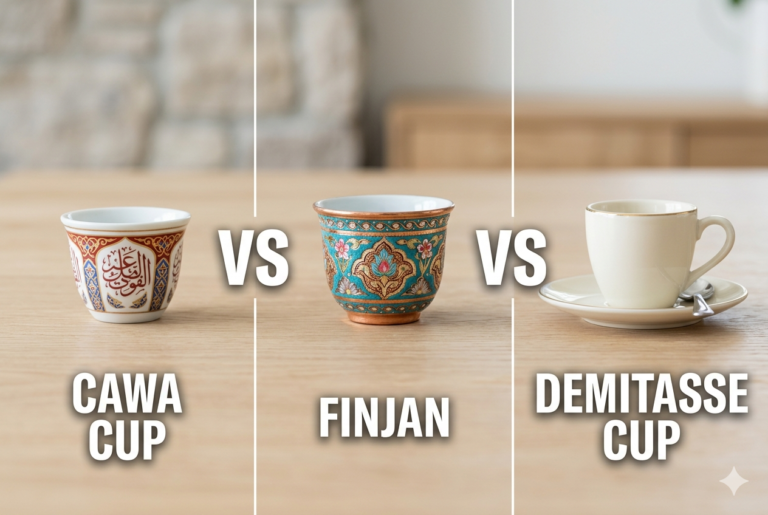
If you’ve ever shopped for Arabic coffee cups — whether for your home, your hotel, or your wholesale business — you’ve probably seen three names used almost interchangeably: cawa cup, finjan, and demitasse. They look similar. They’re all small. They all serve strong coffee. But they are not the same thing, and choosing the wrong one can cost you — especially if you’re sourcing in bulk for a specific market.
After 15 years manufacturing coffee cups for clients across Saudi Arabia, the UAE, Kuwait, Europe, and North America, we’ve seen this confusion lead to real ordering mistakes. This guide settles it.
Quick Answer (TL;DR)
| Feature | Cawa Cup | Finjan | Demitasse |
|---|---|---|---|
| Origin | Arabian Gulf (Saudi, UAE, Kuwait) | Levant, Turkey, wider Arab world | Europe (France / Italy) |
| Handle | No handle | Usually no handle | Always has a handle |
| Saucer | Sometimes included | Usually included | Always included |
| Capacity | 60–100 ml | 50–80 ml | 60–90 ml |
| Typical Coffee Served | Arabic Qahwa (cardamom, saffron) | Arabic or Turkish coffee | Espresso |
| Material | Porcelain, bone china, glass | Porcelain, ceramic | Porcelain, stoneware |
| How It’s Held | Pinched between fingers | Pinched between fingers | By the handle |
| Cultural Role | Hospitality ritual (Majlis) | Hospitality + fortune-telling tradition | Café / after-dinner ritual |
If you’re sourcing for the Gulf market, you want cawa cups. For the Levant or Turkish market, finjans. For European cafés or espresso bars, demitasse.
Now let’s break down each one.
What Is a Cawa Cup?
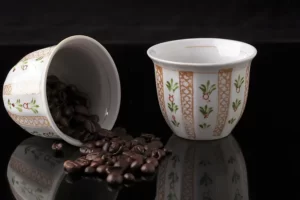
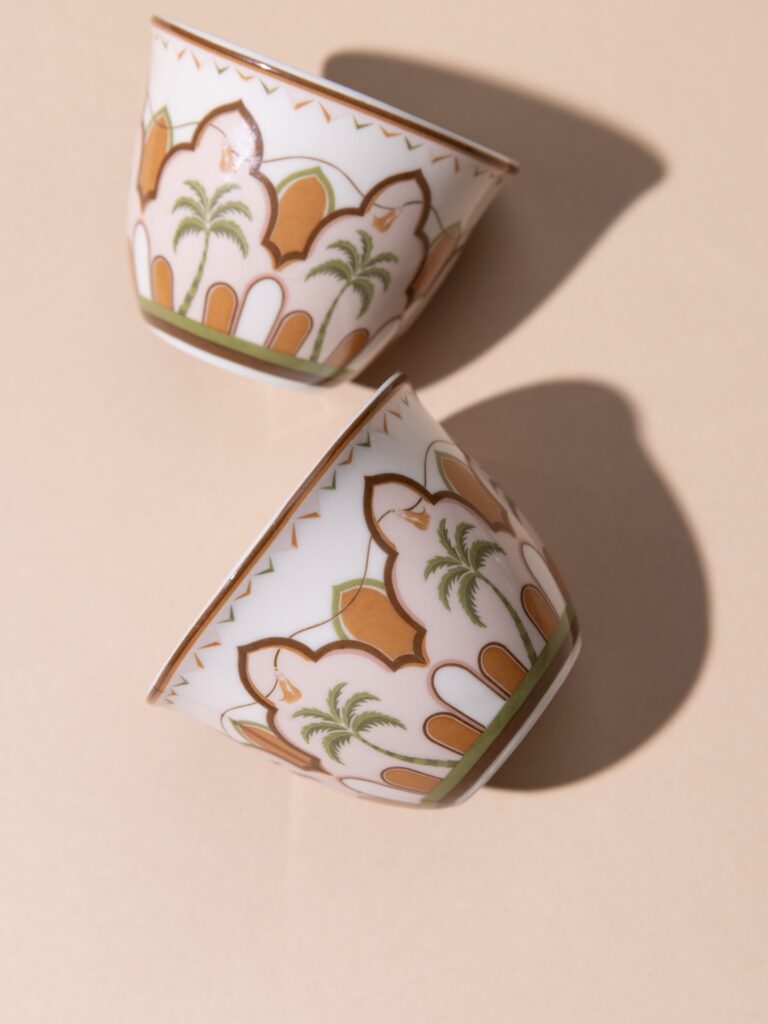
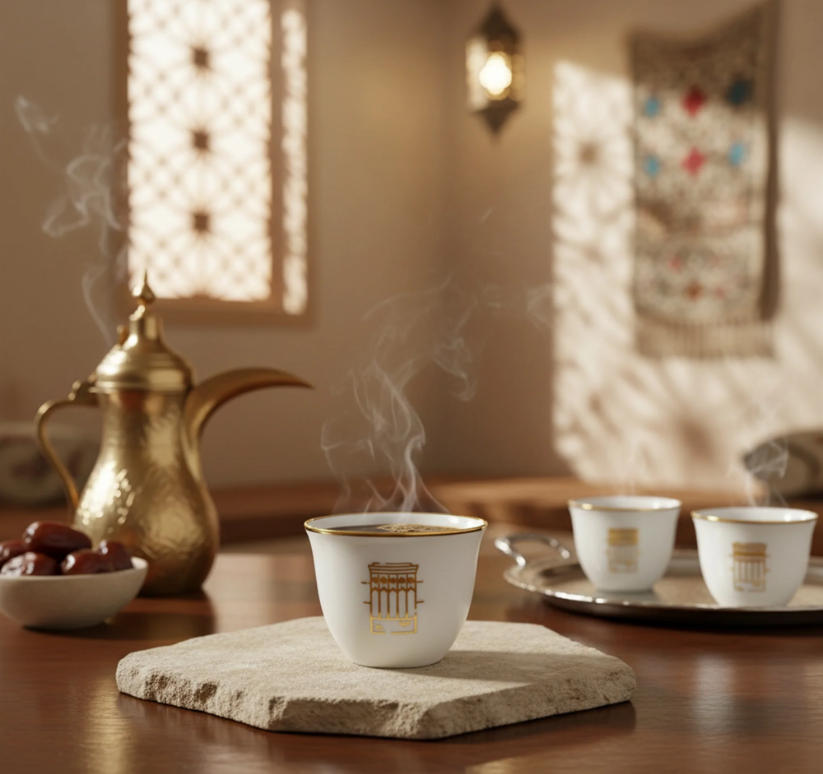
A cawa cup (also spelled gahwa cup, gawha cup, or qahwa cup) is a small handleless cup used to serve traditional Arabic coffee, primarily across the Arabian Gulf — Saudi Arabia, the UAE, Kuwait, Qatar, Oman, and Bahrain.
Key characteristics:
- No handle. The cup is held by pinching the rim between thumb and forefinger, a gesture that is itself part of the hospitality ritual.
- Small capacity, usually 60–100 ml. Arabic coffee is served in tiny portions and refilled multiple times by the host.
- Often decorated with gold or silver rims, palm tree motifs, or traditional Arabic patterns.
- Frequently sold in sets of 6, 12, or 18, sometimes paired with a dallah (Arabic coffee pot).
The cawa cup is inseparable from the cultural ritual of gahwa (Arabic coffee), which UNESCO has recognized as part of the Intangible Cultural Heritage of Humanity. Serving coffee in cawa cups is a gesture of generosity, respect, and welcome — particularly in the majlis (the traditional Arab sitting room where guests are received).
Common buyer use cases we see at our factory:
- Hotels and restaurants in the Gulf
- Wedding favor brands (especially in Saudi Arabia and Kuwait)
- Ramadan and Eid gift sets
- Corporate gifts for Gulf-based companies
- Majlis suppliers and home goods retailers
What Is a Finjan?
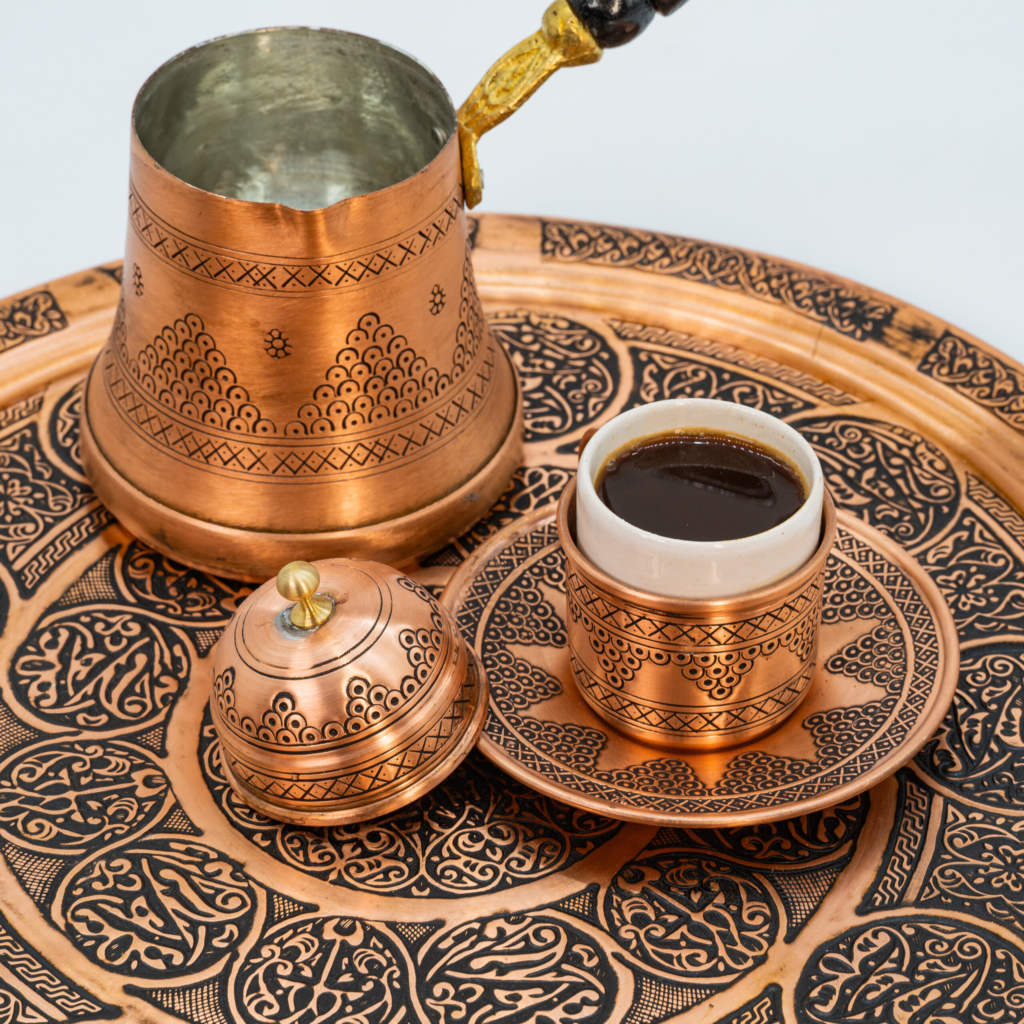
A finjan (Arabic: فنجان; sometimes spelled fincan in Turkish) is the broader, older term for a small coffee cup used across the entire Arab world, the Levant, Turkey, and the Balkans. Every cawa cup is a kind of finjan, but not every finjan is a cawa cup.
Key characteristics:
- Usually no handle, though Turkish-influenced versions sometimes have one.
- Capacity around 50–80 ml, slightly smaller than a cawa cup on average.
- Almost always paired with a saucer (zarf), traditionally made of metal or porcelain.
- Decoration varies widely by region — Levantine finjans often feature blue-and-white floral patterns; Turkish finjans tend toward bold colors and intricate geometric designs.
The finjan is used for both Arabic coffee (cardamom-spiced, lighter roast) and Turkish coffee (dark, finely ground, often sweetened, served with the grounds). In Turkey and the Levant, the leftover grounds in a finjan are used for tasseography — coffee fortune-telling — a tradition entirely absent from Gulf coffee culture.
When to choose finjan over cawa cup:
- Selling to Levantine markets (Lebanon, Syria, Jordan, Palestine)
- Selling to Turkish or Balkan markets
- Stocking for diaspora communities outside the Gulf
- Building a product line that emphasizes traditional pan-Arab design
What Is a Demitasse?
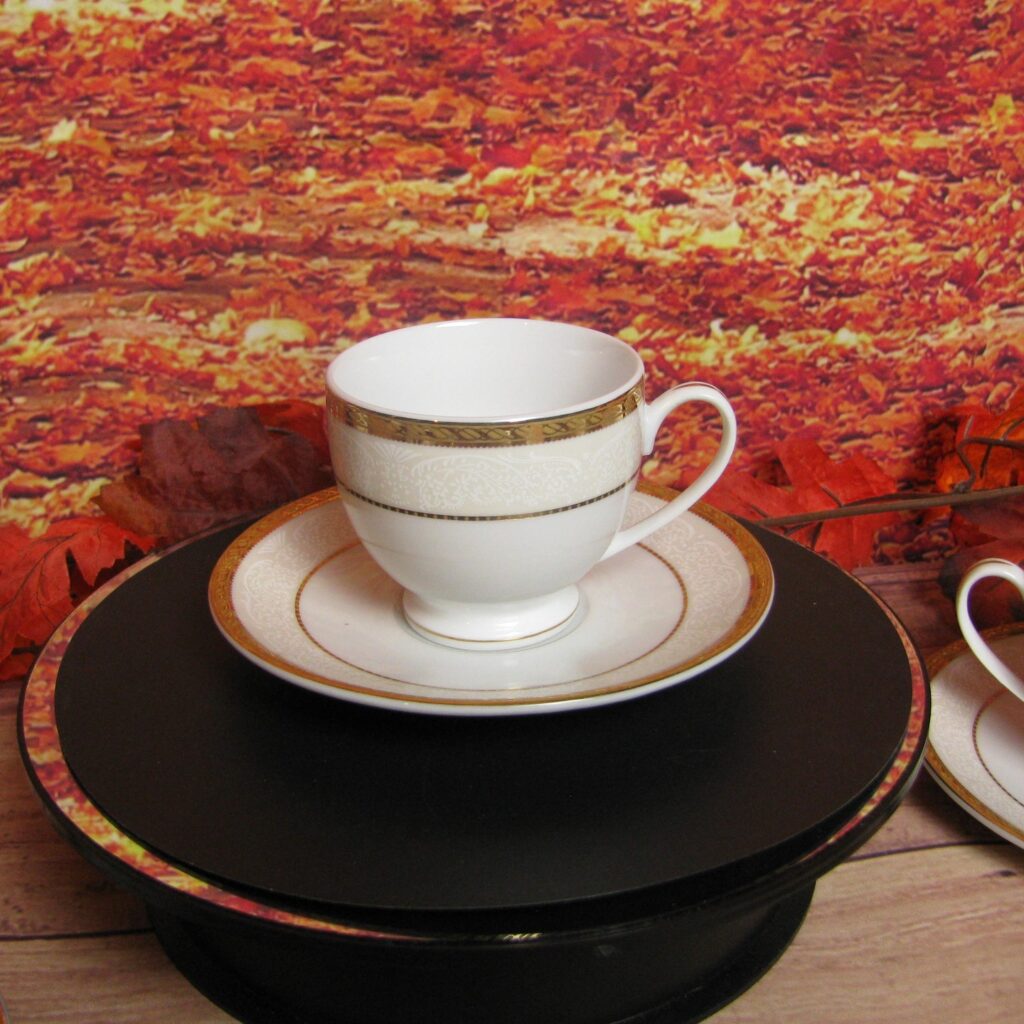
A demitasse (French for “half cup”) is a small European coffee cup designed for serving espresso. It originated in 19th-century France and Italy and spread globally with espresso culture.
Key characteristics:
- Always has a handle — this is the single clearest visual difference from cawa cups and finjans.
- Always served with a matching saucer.
- Capacity 60–90 ml, designed to hold a single or double shot of espresso.
- Typically white or minimalist in design, though luxury brands produce decorative versions.
- Made for high-temperature liquids — porcelain walls are often thicker to retain heat.
Demitasse cups are the standard for cafés, espresso bars, fine dining restaurants, and home espresso machines worldwide. They are functional pieces designed around the European coffee ritual: short, sharp, finished in one or two sips, often accompanied by sugar and a small spoon.
When to choose demitasse over cawa cup:
- Café and espresso bar supply
- Hotel restaurants serving European-style coffee
- Specialty coffee retail
- Markets where customers are unfamiliar with handleless cups
The Three Key Differences That Matter Most
If you remember nothing else from this article, remember these three:
1. The handle tells you the culture. No handle = Arab or Turkish tradition (cawa cup, finjan).
Handle = European tradition (demitasse). The handle isn’t a design choice — it reflects how the coffee is meant to be drunk. Arabic coffee is sipped slowly in a social ritual where the cup is held in the hand and gestures are part of the etiquette. Espresso is drunk quickly and the handle keeps fingers away from the hot porcelain.
2. The coffee inside is different. Cawa cups hold gahwa — light-roasted, cardamom-spiced, often with saffron, served unsweetened with dates. Finjans hold either gahwa or Turkish coffee, the latter being dark, sweet, and unfiltered. Demitasse cups hold espresso — concentrated, dark, often consumed with sugar. The cup shape and material are optimized for each.
3. The market expects different things. A buyer in Riyadh searching for fanajeen qahwa (فناجين قهوة) wants cawa cups with gold rims, not white European demitasse. A buyer in Istanbul wants finjans with traditional Ottoman patterns. A café owner in Milan wants minimalist white demitasse with their logo. Sending the wrong style to the wrong market is the most common sourcing mistake we see new importers make.
Which One Should You Source?
For B2B buyers and private-label brands, here’s how we typically advise our clients:
| Your Market / Use Case | Recommended Cup |
|---|---|
| Gulf hotels, weddings, Ramadan/Eid gifts | Cawa cup, 80ml, gold rim, sets of 6 or 12 |
| Levantine retail (Lebanon, Jordan, Syria) | Finjan with saucer, traditional floral patterns |
| Turkish market or Turkish diaspora | Finjan, often with copper or ornate saucer |
| European cafés and espresso bars | Demitasse, 70-90ml, white or branded |
| Luxury gift market (any region) | New bone china cawa cup with electroplated gold |
| Corporate gifting in GCC | Custom-printed cawa cup set with logo and gift box |
| Home goods e-commerce (global) | Cawa cup sets — they’re trending on Pinterest and Etsy |
If you’re not sure which fits your market, we recommend ordering small sample sets of each before committing to bulk production. At our factory, we ship samples worldwide and can help you test market response before scaling.
Frequently Asked Questions
Is a cawa cup the same as a finjan?
A cawa cup is a specific type of finjan used in the Arabian Gulf for serving gahwa (Arabic coffee). Finjan is the broader Arabic term for any small coffee cup, used across the Levant, Turkey, and the wider Arab world. All cawa cups are finjans, but not all finjans are cawa cups.
Why don’t cawa cups have handles?
The handleless design comes from the cultural tradition of Arabic coffee service. Holding the cup with the fingers is part of the hospitality gesture, and the small portion size means the cup never gets hot enough to require a handle.
Can I drink espresso from a cawa cup?
Yes, you can — the capacity (60-100 ml) is similar to a demitasse. However, espresso is typically much hotter than Arabic coffee, so the lack of handle may be uncomfortable. For an espresso bar setting, a demitasse is more practical.
What is the standard size of a cawa cup?
The most common capacity is 75~80 ml (about 2.7 oz), though 60 ml and 100 ml versions are also widely produced. In our factory, 80 ml is by far the most ordered size for the Gulf market.
Are cawa cups dishwasher safe?
Most modern porcelain and bone china cawa cups are dishwasher safe. However, cups with hand-painted decoration, gold or silver rims, or electroplating should be hand-washed to preserve the finish. Always check with your manufacturer.
What’s the difference between a cawa cup and a Turkish coffee cup?
Turkish coffee cups are a type of finjan, usually slightly smaller (50-70 ml) and often paired with elaborate metal saucers (zarf). Cawa cups are larger on average, simpler in saucer design, and more closely tied to Gulf Arab culture.
What is the MOQ for custom cawa cups?
Our standard MOQ for fully customized cawa cups is 2,000 pieces. That said, we understand every buyer has different needs — whether you’re a boutique brand testing a new design or a wedding-favor supplier with a specific volume requirement. We’re flexible and will do our best to accommodate smaller orders when possible.
How long does it take to manufacture custom cawa cups?
Standard production time is 20-35 days from approved sample. Adding a 7-10 day sample approval phase and 25-35 days sea shipping to the Gulf, total lead time from order to delivery is typically 40-60 days.
What materials are best for cawa cups?
We produce cawa cups in three material tiers, each suited to different markets:
New bone china — the premium choice. Translucent, lightweight, and highly durable, ideal for luxury and gift markets. Best for simple, elegant designs — we don’t recommend it for heavily patterned or multi-color custom artwork, as the material’s strength lies in its refined minimalism.
Porcelain — our most recommended option for custom orders. Durable, high-end finish, and excellent for detailed patterns, multi-color decals, and rich decorative work. If your design has intricate artwork or bold graphics, porcelain is the best canvas.
Ceramic — the most common and cost-effective choice. Durable enough for daily use, and the best value for large-volume custom orders where per-unit cost matters most.
Can cawa cups be customized with a logo?
Yes. Common methods include decal printing (most affordable, full color), screen printing (durable, limited colors), gold/silver foil stamping (premium look), and embossing (high-end, tactile). We offer all four at our factory.
Sourcing Custom Cawa Cups
If you’ve read this far, you’re probably either an importer, a brand owner, or a hospitality buyer figuring out exactly what to order. We’ve spent 15 years making cawa cups for clients in 30+ countries, and we’d be happy to help you spec the right product for your market.
You can:
- See our custom cawa cup options →
- Browse our cawa cup catalog →
- Message us on WhatsApp for a same-day quote
Whether you need 500 wedding-favor sets for a Saudi client or 50,000 hotel cups for a Gulf chain rollout, we manufacture to spec, with CE certified production.